The Professional Ceiling
Getting a Professional License With a Criminal Record in California
You can learn the trade, earn the certificate, put in the hours, and prove you can do the work—then discover that one more gate stands between you and the career: permission from the state.
For people returning from incarceration, that gate can be confusing. California has narrowed how many licensing boards may use criminal history, but the rules are not identical for every profession. The practical question is not simply whether you have a record. It is what the agency controlling the license is legally allowed to consider.
What You Need to Know Now
California's AB 2138 reforms still matter. For many Department of Consumer Affairs licensing programs, the ordinary framework focuses on whether a conviction is substantially related to the profession and whether it falls within the applicable seven-year period.
Important exceptions exist, and not every occupation is governed by the same agency. Before paying for school, exam fees, or an application, identify the exact regulator and read its current criminal-history rules.
The Professional Ceiling
Season 1 · Episode 3

A Skill Is Not Always the Same Thing as Permission to Work
Imagine spending years learning a trade inside—cutting hair, studying construction, earning technical certificates, or gaining firefighting experience—only to discover after release that the occupation requires a government-issued credential.
That is the professional ceiling: the point where someone can have the ability, experience, and willingness to work but still face a licensing decision tied to an old conviction.
California has lowered that ceiling. It has not eliminated it.
What AB 2138 Changed
Assembly Bill 2138 took effect in 2020 and restricted how many licensing boards within the California Department of Consumer Affairs may use criminal history. For many covered boards, the ordinary framework centers on convictions that are substantially related to the qualifications, functions, or duties of the profession and occurred within the statutory time period.
That shifts the decision away from a simple question—“Does this applicant have a conviction?”—toward a narrower one: “Is this conviction legally relevant to this license under the current rules?”
Seven Years Is Not a Universal Erase Button
The seven-year framework has exceptions. California licensing law allows broader consideration in specified circumstances, and individual professions can have additional statutory requirements.
There is another reason not to rely on a generic internet answer: not every California credential is regulated by the same agency. A Department of Consumer Affairs board, another state department, and a local licensing authority may operate under different statutes and procedures.
Rehabilitation Is Evidence, Not a Slogan
If criminal history can legally be considered, the application should show who you are now. Useful evidence can include education and training records, employment history, program-completion certificates, letters from credible supervisors or instructors, community involvement, court orders, and qualifying record relief.
A licensing board does not know your growth unless the file shows it. Treat the application like a professional case file, not a form you fill out at the last minute.
From Training to a Fire-Service Career
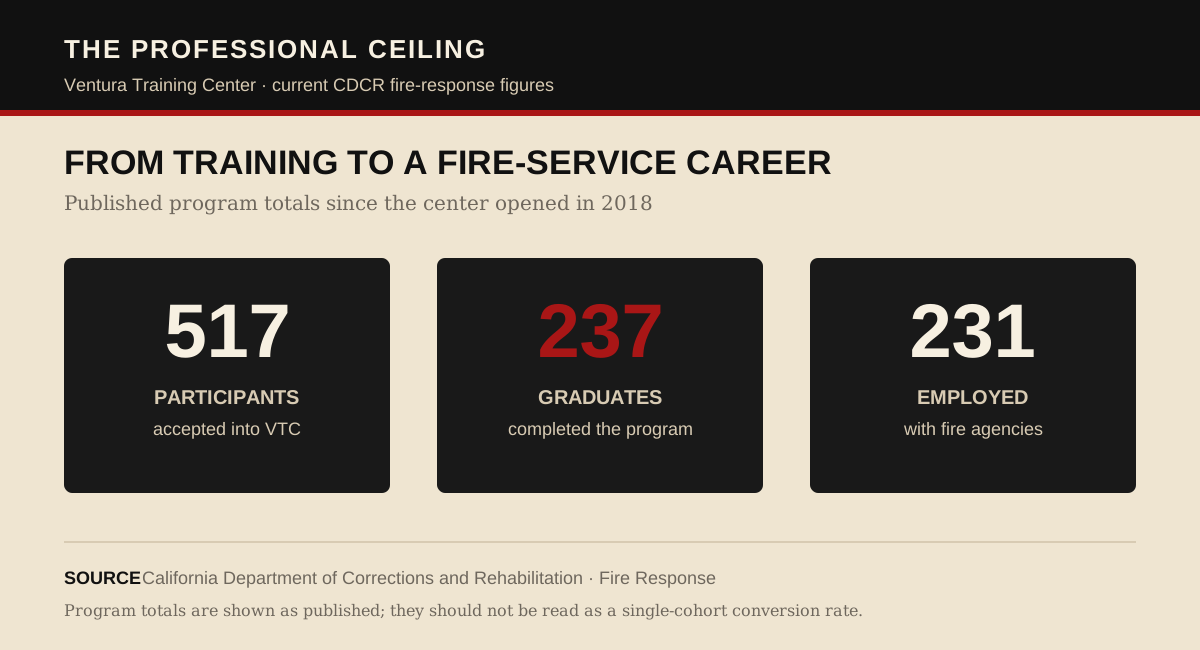
Published CDCR program figures: 517 participants accepted into the Ventura Training Center since 2018, 237 graduates, and 231 people who gained employment with local, state, or federal fire agencies.
The Firefighter Pathway Shows What Reform Can Change
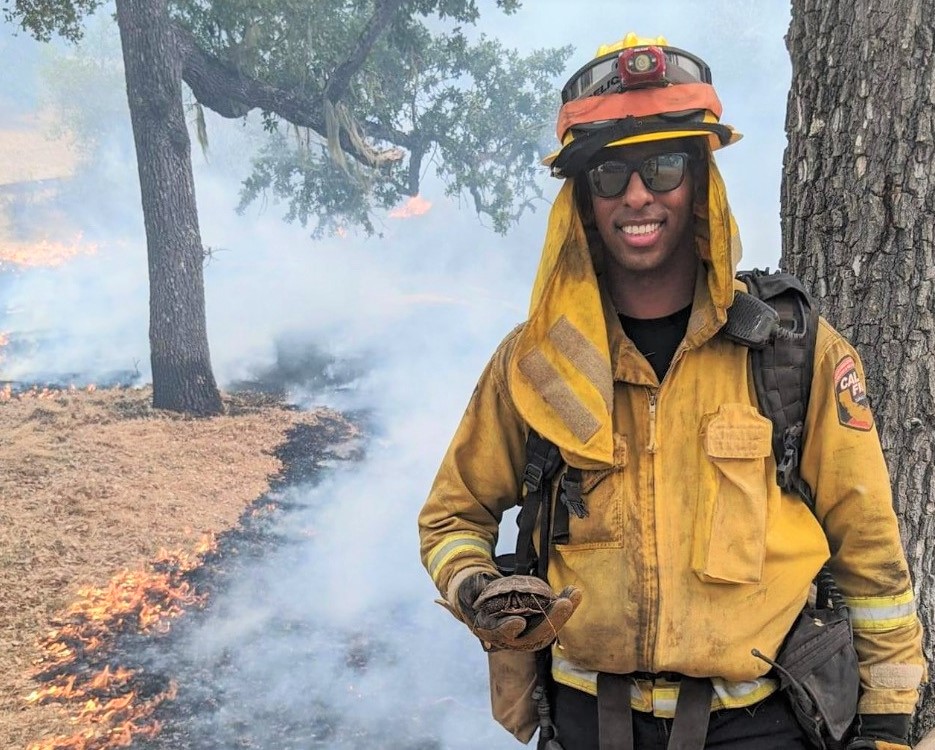
California's conservation fire camps are one of the clearest examples of the gap between training and professional access. Incarcerated hand crews receive real wildland firefighting experience, yet criminal records have historically created barriers to credentials and employment after release.
AB 2147 created an expedited record-relief process for qualifying people who successfully served as firefighters in a conservation camp. The relief is not automatic, and it does not itself create a firefighter or EMT license, but it can remove a barrier that otherwise interferes with a fire-service career.
A Denial Does Not Always End the Process
For licensing boards governed by Business and Professions Code section 485, a written denial can carry hearing rights. The notice should be treated like a deadline—not filed away as a final answer.
Read the stated reason for denial. Compare it with the agency's criminal-history rule. Check whether the applicable time period and substantial-relationship standard were used correctly and what appeal or hearing procedure is available.
Six Moves Before You Apply
- Identify the exact license. Find the board, bureau, department, or local agency that issues the credential.
- Read the criminal-history rule. Use the regulator's current requirements rather than a school's marketing material.
- Get your own record. Know the exact conviction, dates, disposition, and any dismissal, sealing, expungement, or other relief.
- Build a rehabilitation packet. Keep training records, work history, references, court orders, and evidence of successful reentry in one file.
- Check special pathways. Profession-specific statutes or programs may change the route.
- Read a denial immediately. If a hearing or appeal is available, identify the deadline before doing anything else.
The Ceiling Is Lower Than It Used to Be
A conviction can still complicate a professional-license application in California. It does not automatically end every licensed career.
The strongest approach is specific: identify the profession, identify the regulator, read the current rule, verify your own record, document rehabilitation, and use any review process the law gives you.
Reentry works better when training actually leads somewhere. A person who has built a skill should at least be judged under the rules that exist today—not under assumptions left over from a different era.
Sacramento Starting Point
2-1-1 Sacramento Job Finding Assistance: local employment programs, preparation, training, and job-finding referrals. Dial 2-1-1 or 916-498-1000. Open job-finding resources ↗
Verified Sources & Further Reading
- California Department of Consumer Affairs — AB 2138 licensing data and reporting
- California Department of Consumer Affairs — AB 2138 implementation materials
- California Department of Consumer Affairs — License search and board directory
- CDCR — Fire-camp record relief and AB 2147
- CDCR — Ventura Training Center
- CDCR — Fire Response and Ventura Training Center figures
Support Independent Reentry Media
Collateral Consequences turns complicated rules into practical information people can actually use. Your support helps fund research, production, outreach, and future reporting on the barriers that continue after incarceration.
Support Collateral Consequences on Givebutter →
With appreciation to BAVC Media for serving as the fiscal sponsor of Collateral Consequences: Freedom's Fine Print and supporting this independent media project.
Need Reentry Resources?
The Reentry Village connects people with practical resources for housing, employment, healthcare, identification, education, recovery, legal assistance, benefits, transportation, and family stability.
Collateral Consequences: Freedom's Fine Print is hosted by Larenzo and fiscally sponsored by BAVC Media.
Educational and informational content only. This article is not legal advice. Licensing laws, agency guidance, eligibility rules, and procedures can change. Confirm current requirements with the agency responsible for the profession or a qualified professional.